
Speech Sound Disorders

What are Speech Sound Disorders in Children?
As children learn to talk, they often say sounds and words incorrectly. These difficulties can be typical in many ways. For example, a toddler may say “wawa” instead of “water”, or a preschooler may say “wabbit” instead of “rabbit.” However, as children grow older, they learn to say sounds correctly. Different sounds and patterns have an age of mastery. In other words, children should be able to say certain sounds by certain ages. Most children will work through these independently, and don’t need direct teaching or speech therapy. A child who is not learning to say sounds by their expected ages may have a speech sound disorder and would benefit from speech therapy.
Types of Speech Sound Disorders
“Speech sound disorder” is an umbrella term referring to any difficulties regarding the perception and production of speech sounds. When we think of speech sound disorders, we can categorize them into articulation, phonological, motor and organic based. Here we’ll talk about the differences:
-
Articulation refers to how we make sounds. Producing sounds requires the coordinated movements of necessary body parts (e.g. lips, tongue, teeth, palate, lungs). If a child has an articulation disorder, they have trouble making certain sounds. For example, they may not be able to move their tongue into the right position to say the r sound, so they say “wed” instead of “red.” An articulation disorder may also relate to a lisp, so their s sounds like a th (e.g. “that” instead of “sat”). This can affect overall speech clarity and make communication challenging.
Articulation disorders can occur due to a variety of factors, including oral-motor difficulties, hearing impairments, or developmental delays. If left unaddressed, they can affect a child's confidence and ability to be understood by others.
-
Phonology refers to the way we organize speech sounds to formulate words. Phonological disorder is a speech sound disorder where a child has difficulty organizing the sound patterns of language. Unlike articulation disorders, which affect the ability to physically produce specific sounds, phonological disorders involve patterns of errors related to the linguistic and cognitive processing of speech and language. The use of phonological patterns is typical as children are developing their language and attempting to approximate adult speech. However, if children continue to use these patterns beyond their expected ages, they likely need direct speech therapy to help. Some examples of phonological patterns include, cluster reduction (e.g. “side” for “slide”), gliding (e.g “wion” for “lion”) and fronting (e.g. “tan” for “can”).
Phonological disorders can occur without a known cause or may be linked to developmental delays, hearing loss, or neurological conditions. If left untreated, they can affect a child’s reading, spelling, and overall communication skills.
-
Childhood Apraxia of Speech (CAS) is a neurological speech sound disorder that makes the planning and coordination required for speech difficult. CAS is a label for the type of speech sound difficulties a child is facing. In other words, CAS is not a medical diagnosis. When we think of the umbrella of speech sound disorders, CAS falls within motor speech disorders. It can be congenital or acquired during speech development, but is often idiopathic in nature, as the cause is unknown. It can also be caused by a neurological insult (e.g. stroke in-utero, traumatic brain injury) or correlated with a genetic syndrome or neurobehavioral differences (e.g. autism). Children with CAS know what they want to say, but their brains have difficulty sending the right messages to their mouth muscles to make the words.
Evaluation for CAS
A licensed speech-language pathologist (SLP) with specialized training and experience with motor speech disorders can make a diagnosis of CAS. The evaluation process involves a comprehensive approach, during which our SLPs assess multiple aspects of the child’s speech and motor planning abilities. First, a thorough case history is acquired from the caregiver to learn about the child’s speech and language development thus far and how they are communicating across settings. Next, the SLP will use a motor speech assessment to gather information about the child’s ability to produce speech sounds and sequences. Additionally, the SLP will be listening and watching for inconsistent errors, difficulty with transitioning from one sound to the next, and impaired prosody (the rhythm and intonation of speech), as children with CAS often exhibit these characteristics.
During testing, it’s essential that dynamic evaluation take place. This involves providing the child with a variety of cues to see how their performance changes. For example, if the child incorrectly produces the word “go” during testing, the SLP may lead them through a variety of visual, verbal and tactile prompts to help them say it correctly. The child’s ability or inability to improve their speech when prompting is used can help differentiate CAS from other speech sound disorders. Ruling out other speech or language disorders is an important step in the evaluation process, as CAS can sometimes be mistaken for other communication difficulties (e.g. expressive language disorder, phonological disorder).
Treatment of CAS
The accurate diagnosis of CAS is crucial for the implementation of effective speech therapy. Once it is determined that a child has CAS, your SLP will create a treatment plan that uses evidence-based strategies. Some evidence-based strategies for CAS include:
· Apraxia training techniques, such as Dynamic Temporal and Tactile Cueing (DTTC) and Rapid Transition Syllable Training (ReST)
· Individualized targets
· Frequent and intensive practice
· Multi-sensory input (e.g. tactile, gestural, auditory)
· Focus on movement and prosody
· Implementation of augmentative and alternative communication (AAC) as needed
At the end of the day, your child’s speech therapy for CAS should focus on improving their ability to communicate for a variety of functions (e.g. commenting, requesting, greeting, protesting)! While incorporating a variety of evidence-based techniques, your SLP’s concern is increasing your child’s confidence for communication! Remember that you are the expert on your child, and if you feel like the treatment approach isn’t working, talk to your SLP. CAS treatment requires a collaborative process between parents, SLPs and educators.
Navigating CAS can be a challenging journey, but with the right support, your child can go on to be a confident and efficient communicator! Check out these resources for more information:
-
Have a known physical cause, such as cleft palate or hearing loss.
Summary
In conclusion, articulation, phonological disorders, childhood apraxia of speech (CAS) or organic speech sound disorders can impact a child’s speech intelligibility. Phonological disorders and CAS often affect overall communication more significantly. Speech therapy approaches differ based on the type of disorder. Articulation therapy focuses on helping a child correctly produce specific sounds, while phonological therapy targets patterns of errors to improve the child’s understanding of speech rules. Navigating CAS and organic speech sound disorder treatment requires a collaborative process between parents, SLPs, physicians and educators.
If your child is struggling with speech clarity, our speech-language pathologists can assess whether the difficulty stems from an articulation disorder, a phonological disorder, CAS and/or an organic speech sound disorders. We use specialized techniques to help children learn proper tongue and mouth placement for clearer speech. Therapy may include structured exercises, visual and tactile cues, fun activities to practice correct sound production, and more! Early intervention can make a big difference! If you’re concerned about your child’s speech, a professional evaluation can provide the support needed for clearer communication. Contact us today to learn more about how we can help your child speak with confidence!
Speech Therapy Tools
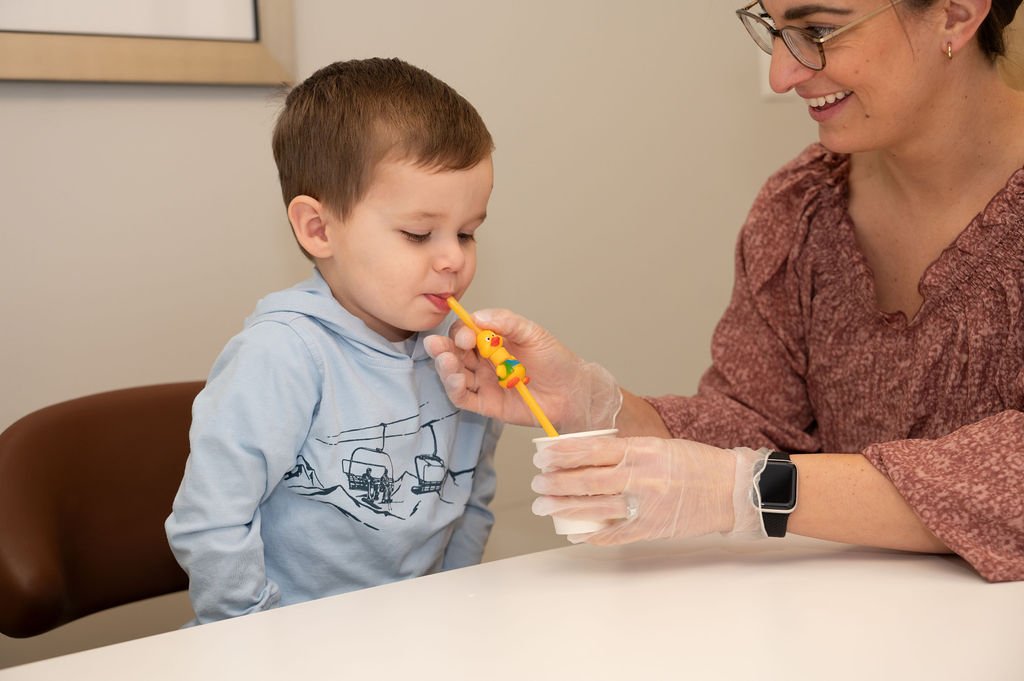
TalkTools®
Oral-Placement Therapy (OPT) Therapy techniques to add a tactile component to feeding and speech therapy, enabling clients to “feel” the movements necessary for the development of speech clarity.

Speech Buddies Placement Tools®
One of many tools utilized at SLP Center. Your clinician will choose the right tools for your child. At home you may practice learned strategies from speech therapy to see results.

Kaufman Apraxia Treatment®
Method for teaching young children how to produce and combine the oral motor movements necessary to speak functionally, and intelligibly.