

AAC Apps on Sale for AAC Awareness Month!

AssistiveWare is offering 50% off 6 of their most popular apps in celebration of AAC Awareness Month!
Mark your calendars - the sale starts October 10!
Why We Use Horns and Straws in Therapy
Here at the Speech Language Pathology Center, all our therapists are trained in Oral Placement Therapy, but what is that exactly? Developed by Sara Rosenfeld-Johnson, “Talk Tools” focuses on building awareness, placement, stability, endurance, and muscle memory of oral structures for improved speech clarity and swallowing function. This program involves two key parts: horns and straws.
The straws target tongue retraction, which is essential for correctly producing a variety of sounds including /s, z, and r/. When using the straw, the client is asked to take a small sip, smile, and then swallow. The goal is to achieve 20 swallows. Using this sequence ensures tongue retraction. There are a total of 7 straws that we use here. As clients progress through the hierarchy, “the goal is to achieve close to a 75% retraction…When the back of the tongue is in stabilized retraction it allows the tip of the tongue to move side to side” (Rosenfeld-Johnson, 1999).

The horns target phonation, reducing/eliminating drool, improving speech clarity, and improving sensory awareness. There are a total of 12 horns that we use here. As clients progress through the hierarchy, the horns target the abdominal muscles, velum, jaw, lips, and tongue. When using the horn, the client is asked to activate the horn using strong breath support. The goal is the achieve 25 activations.

These tools can be used with clients at any age. Some populations that benefit from oral placement therapy are those with tongue thrust, cleft palate repairs, feeding difficulties, speech sound disorders, bruxism (teeth grinding), and low tone. To learn more about this program, visit the Talk Tools website. If you have any additional questions or would like further information, please give us a call to speak to an experienced clinician!
References:
Rosenfeld-Johnson, S. (1999). Straws As Therapy Tools. Advance.
Rosenfeld-Johnson, S. (1999). Horns As Therapy Tools. Advance.
Suicide Prevention and Awareness Month

September is suicide prevention and awareness month.
Many have lost loved ones to the battles of mental health. While discussions of mental health and suicide have risen, many people don’t realize or discuss the mental health struggles that also affect neurodiverse and people with disabilities. Take time to check in on loved ones, neurotypical and neurodiverse, to let them know that they are not alone. There are two walks/runs taking place in Boston and on the South Shore/Cape to bring awareness to mental health and suicide prevention. For more information or to register or volunteer, please visit their websites. Additionally, we’ve included links to organizations in Massachusetts who have set out to increase awareness and destigmatize discussions of suicide and take steps to ensure people of all ages have supports and resources to help them through challenging times.
2023 South Shore/Cape Cod Out Of Darkness Community Walk
Date/Time: 9/30/2023 at 9:00AM
Location: Buzzards Bay Park, Bourne, MA
Contact: jvanderstad@afsp.org
Phone: 617-439-0940
https://supporting.afsp.org/index.cfm?fuseaction=donorDrive.event&eventID=9609
25th Annual Samaritans 5k Run/Walk for Suicide Prevention
Date/Time: 9/23/2023 at 10:00AM
Location: Artesani Park, 1255 Soldiers Field Rd., Boston, MA 02135
https://support.samaritanshope.org/event/2023-5k-run-walk-for-suicide-prevention/e478133
Helpline & Organizations with Resources and Support
Suicide and Crisis Lifeline, available 24/7 – call 988
MA Behavioral Health Helpline, available 24/7 – call/text 1-833-773-2445
Network of Care: Massachusetts – Find Behavioral Health Services near you! - https://massachusetts.networkofcare.org/mh/services/subcategory.aspx?cid=45105&k=Suicide+Prevention&tax=RR-5150.5000-800
The JED Foundation - https://jedfoundation.org/our-work/its-ok-to-say-suicide/
The NAN Project – based in Lexington, MA - https://www.thenanproject.org/resources/
National Alliance on Mental Illness - https://www.nami.org/Home
Happy Grandparents' Day!
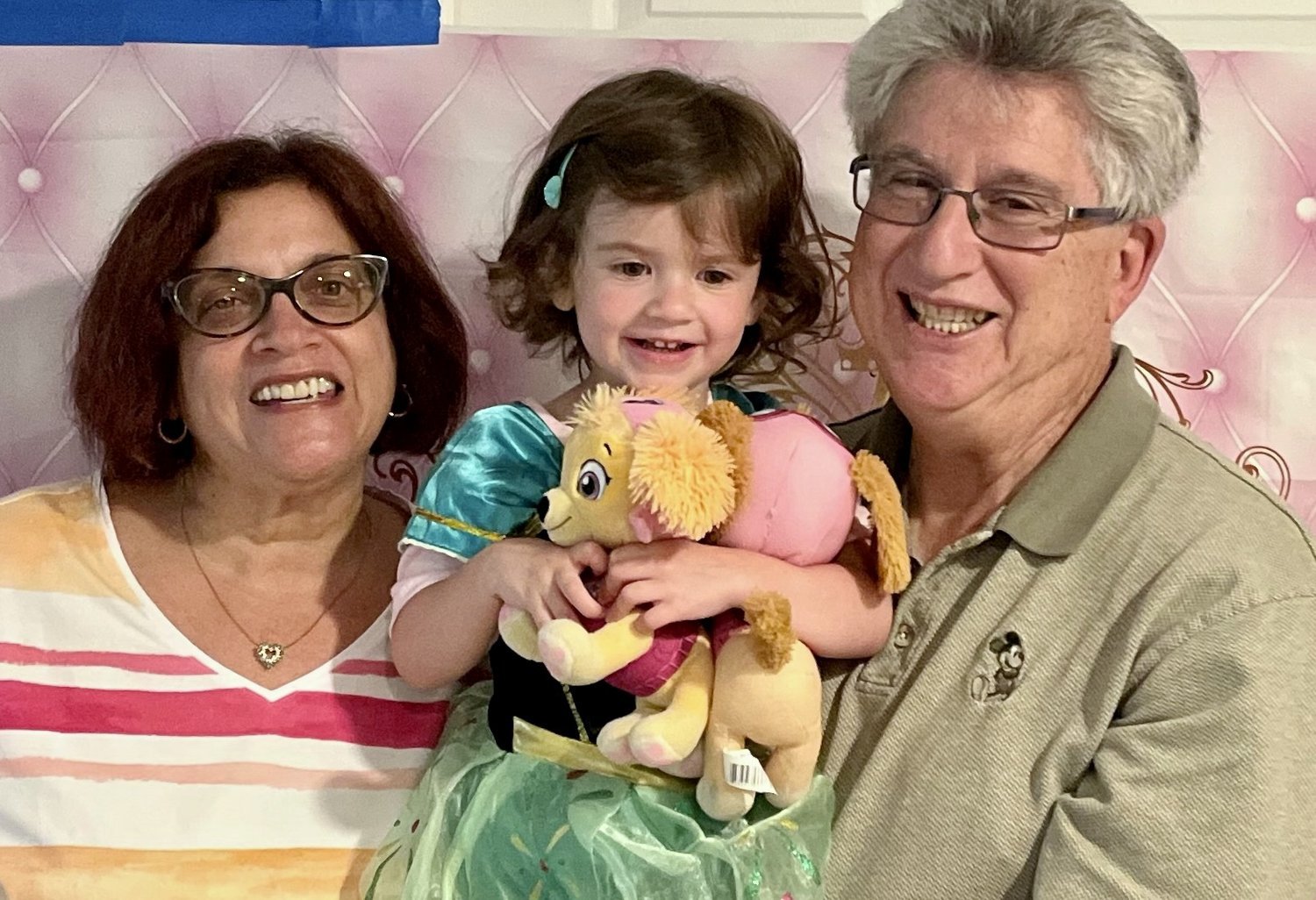

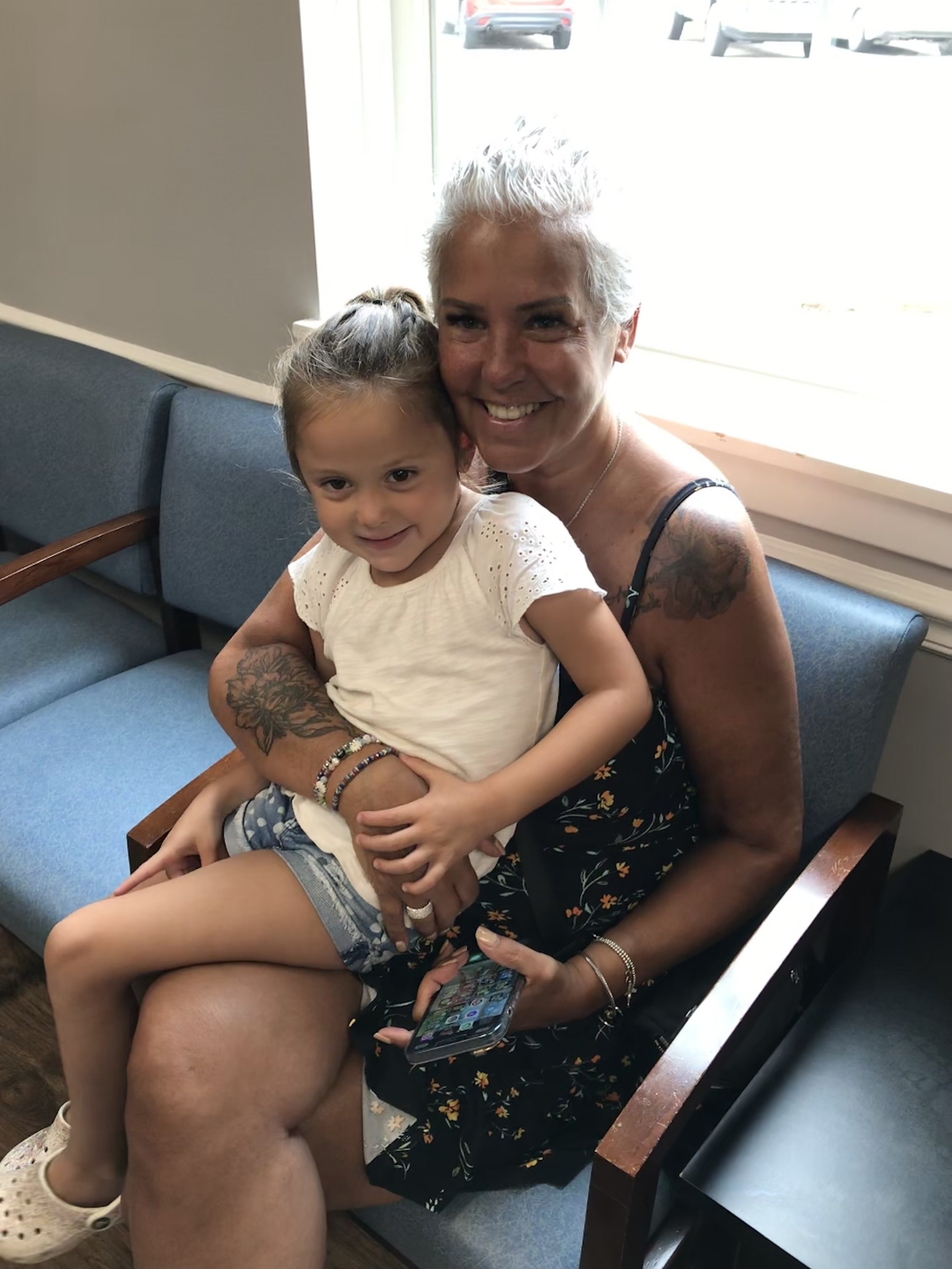
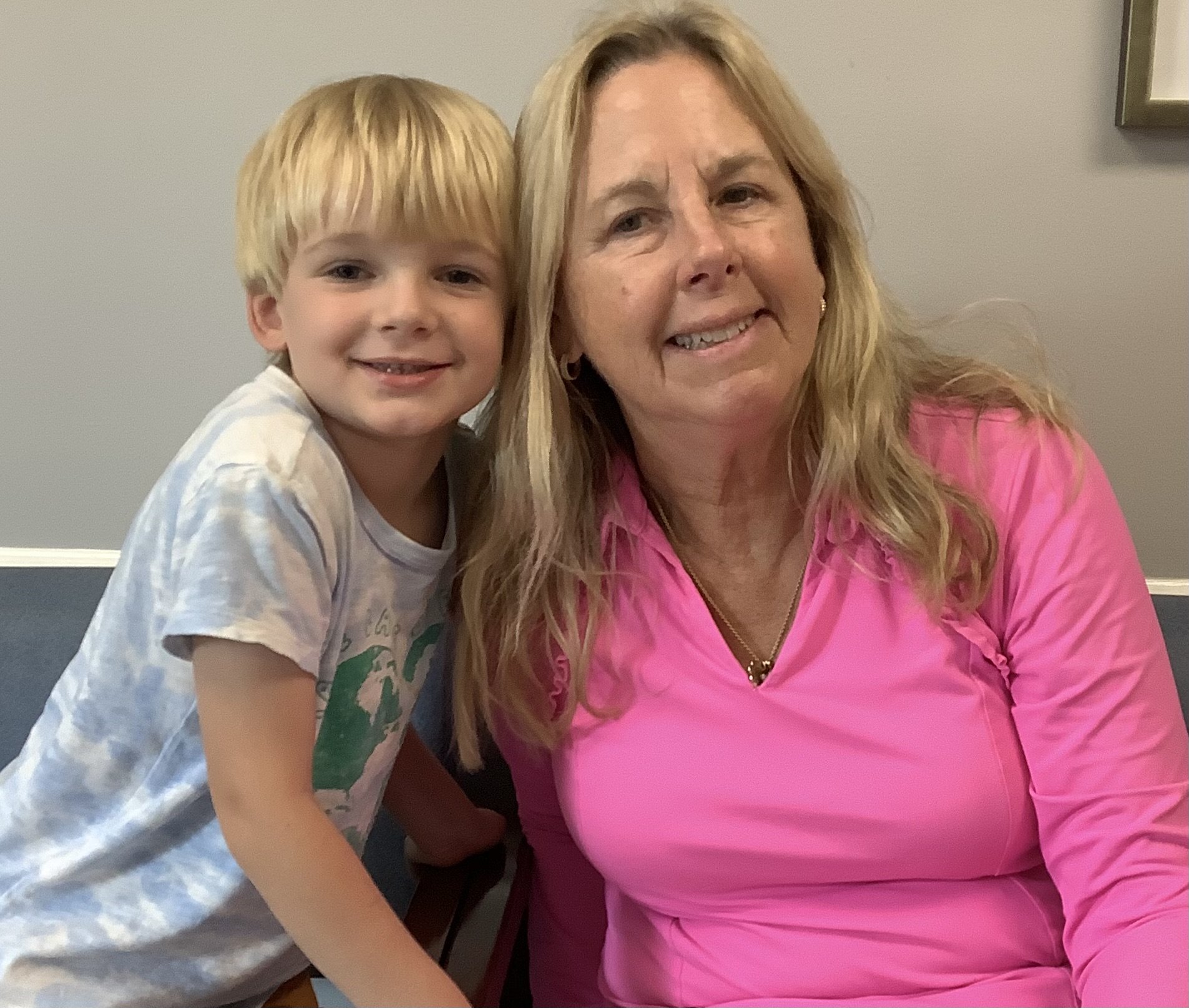
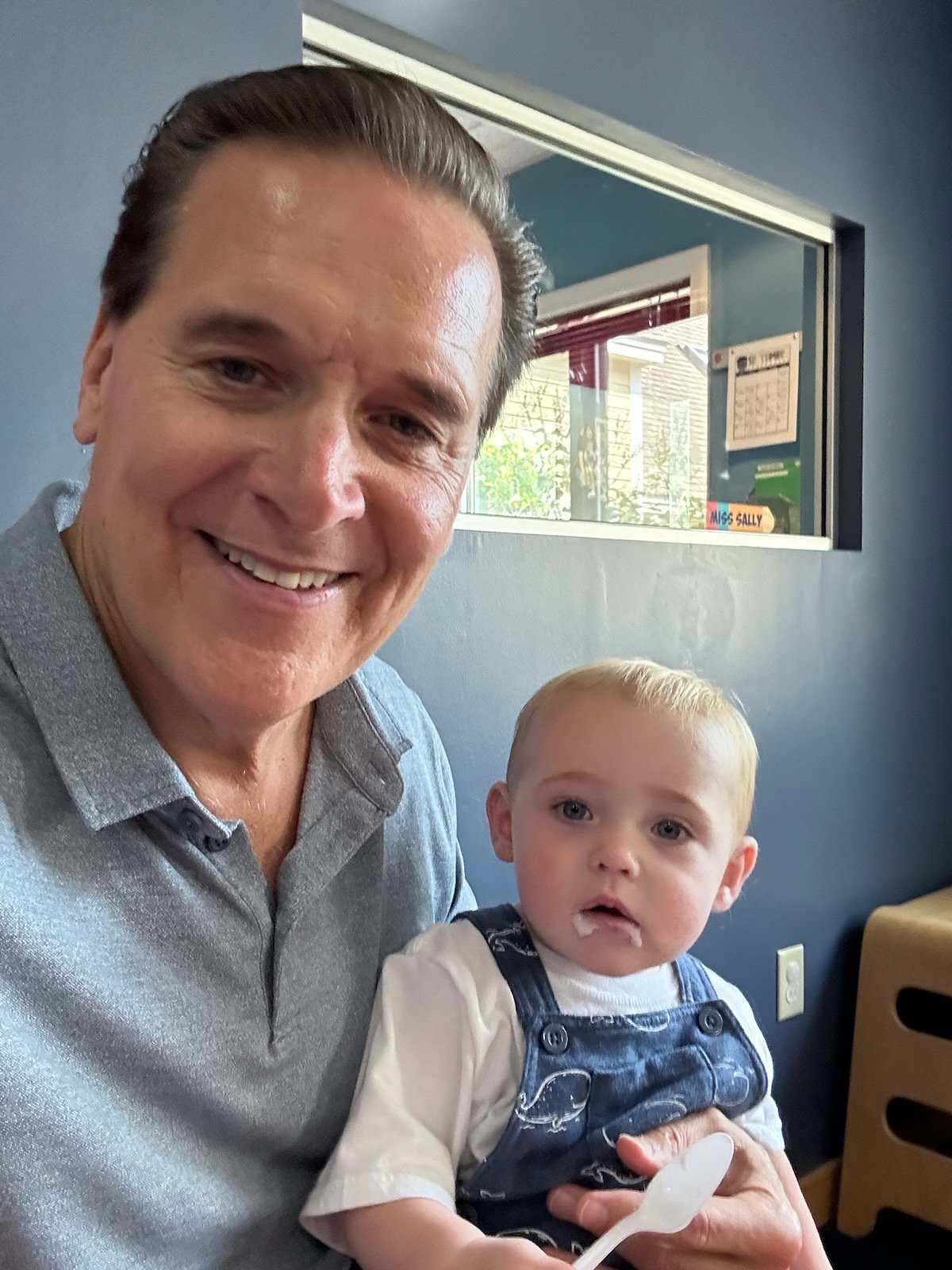
We want to express our heartfelt gratitude to all our grandparents for your invaluable support in helping bring your grandchildren to speech. Your love and dedication are truly priceless, and we cherish the special relationship you have with them.
Selective Mutism – It’s not just “shyness”

Selective Mutism (SM) is an anxiety-based disorder that results in the person having an underlying fear of speaking in public or less comfortable speaking situations (e.g., school, restaurants, around unfamiliar people, etc.). People with SM often speak freely at home or with family members whom they are most comfortable with. They do not always have an underlying speech or language disorder, but they can co-occur. SM can present in children as young as 2-years-old. It is essential to seek treatment through a multidisciplinary approach, especially for children, to ensure that the avoidance of speaking situations doesn’t become reinforced, making it more difficult to speak as the child gets older. Multidisciplinary teams treating SM often include a psychologist/psychiatrist or mental health counselor, speech-language pathologist, and special educators. For children with SM, school can be one of the most challenging environments for them to speak in. Therefore, it is essential that their treatment doesn’t just take in place in the confines of an office, but that they also receive accommodations in the classroom or have classroom support to help generalize the skills and strategies that they learn into natural speaking contexts.
The Diagnostic and Statistical Manual of Mental Disorders, 5th edition (DSM-5) lists the following criteria for a diagnosis of SM:
The child shows consistent failure to speak in specific social situations in which there is an expectation for speaking (e.g., at school), despite speaking in other situations.
The disturbance interferes with educational or occupational achievement or with social communication.
The duration of the disturbance is at least 1 month (not limited to the first month of school).
The failure to speak is not attributable to a lack of knowledge of, or comfort with, the spoken language required in the social situation.
The disturbance is not better explained by a communication disorder (e.g., child-onset fluency disorder) and does not occur exclusively during the course of autism spectrum disorder, schizophrenia, or another psychotic disorder.
If you or someone you know exhibits characteristics consistent with a diagnosis of SM, please feel free to reach out to our office to speak to a clinician about next steps. Below are a few resources to visit to learn more about SM and possible interventions:
The Selective Mutism Association provides numerous resources for families and treating professionals. They also offer courses, webinars, and present at conferences to spread the word about SM and to provide support for individuals, caregivers, and professionals working with this population.
The American Speech-Language-Hearing Association (ASHA) also provides information about SM, including signs and symptoms, assessment, treatment, and additional resources.
🏆 Speech Graduation Shout-out!

Hard work pays off and we love when kids “graduate” from speech after having met their goals! Your success is our greatest reward! Here’s what our recent star’s family had to say about her experience: “Wonderful Speech Therapists!! Caitlin was amazing with helping our child on her journey!! Very grateful to all of this staff!”
If you think your child or loved one may benefit from speech therapy services, please give our office a call to speak directly to one of our experienced clinicians!
Introducing SOCIAL SKILLS GROUPS!

We are so excited to introduce SLP Center’s newest offering: social skills groups! We will be offering 3 separate groups this summer: early elementary-aged kids (5-9), middle schoolers/pre-teens (10-15), and adolescents/young adults (16+). The groups will be professionally led by our team of speech pathologists.
Sessions will be 1 hour in duration, weekly for 6 weeks July 10th through August 18th
CLASSES FULL - Watch for upcoming sessions or call to get on our priority list!
Note: Presidents' Day CLOSED & Remainder of Vacation Week OPEN!
In observation of Presidents’ Day, the SLP Center will be closed on Monday, February 17th. We will be open for the remainder of the week (February vacation week for schools). Please call the office at 781-792-2700 should you need any adjustments to you schedule. Thanks!

Autism Acceptance Month Events & Activities 2023

Mark your calendars! In honor of Autism Acceptance Month, The Arc South Shore is hosting several events to bring awareness to, support, and celebrate those with autism. Events include caregiver wellness, an ice cream social, sensory friendly movie, story time yoga, and a Disney animation social club. Please visit this website for event-specific dates, details, and how to register!
In addition, organizations all over MA are hosting events and activities with a focus on including and providing access to neurodiverse individuals and families. Below are some of the events that are scheduled for the rest of the month of April around the state:
Bailey’s “Autism Family Day” at the Zoo **RSVP by April 15
When: Saturday, April 29 from 9:30-2pm
Where: Franklin Park Zoo
Sensory-Friendly Sundays at the Museum
When: Sunday, April 16 from 9-10am
Where: Charlestown, MA
Adaptive Indoor Climbing for All Ages
When: Sunday, April 16
Where: Adaptive Climbing Group, Somerville, MA
Miracle League Baseball for Adults
When: Sunday, April 16 – June 4
Suicide Prevention & Awareness in Autistic Adults and Adolescents
When: Wednesday, April 19
Where: Webinar presented by Vinfen of Cambridge, MA
AMC Sensory Friendly “The Super Mario Brothers Movie”
When: Saturday, April 22
Where: AMC Theatres in Burlington, Framingham, Methuen, North Dartmouth, and Tyngsboro
When: Sunday, April 23-June 4
Where: Hingham, MA
Adaptive Climbing for Ages 5-17
When: Sunday, April 23
Where: Adaptive Climbing Group, Somerville, MA
When: Sunday, April 23 from 4-5:30pm
Where: Somerville Theatre, Somerville, MA
Parent Group: Children with Autism hosted by Sudbury SEPAC
When: Wednesday, April 26 from 12:30-2pm
Where: The Local, Wayland, MA
Autism Conference for Parents & Professionals
When: Saturday, April 29 from 10-2pm
Where: Virtually with Endicott College, Beverly, MA
Free Sensory-Friendly Petting Zoo hosted by Bierman Autism Centers
When: Sunday, May 7 from 11-1pm
Where: Bierman Autism Centers, Bedford, MA
Visit the Autism Speaks website to learn more about autism and how you can get involved, not just this month, but year round!
AAC App Sale for Autism Acceptance Month!
Seven days of discounts for Autism Acceptance Month 2023! Read below for more information about the sale:
“In honor of Autism Acceptance Month, we offer a week-long discount on all our popular AAC apps. From March 28 - April 3, get an extra trial month free on AssistiveWare’s newest apps Proloquo and Proloquo Coach, as well as a 50% discount on our other apps, including Proloquo2Go.
AssistiveWare is committed to expanding the use and acceptance of AAC. That’s why we offer a 50% discount or a two-month free trial on a range of our top AAC apps and learning solutions, making them more accessible to families, individuals, and schools on a budget.
Here are some of the apps included in the discount:
Proloquo & Proloquo Coach are two apps that work together. Proloquo is an easy-to-use AAC app for iPad, and Proloquo Coach is to guide and support parents and caregivers of AAC users.
Proloquo2Go (Mac and iOS) is the most popular AAC app. It has everything you need for communication and language growth. You can customize it to fit various needs.
Gateway vocabulary- an efficient core word vocabulary for children, teens, and adults - available as an optional in-app purchase in Proloquo2Go.
Proloquo4Text (Mac and iOS) is a Text-to-Speech app for literate AAC users seeking a more efficient communication solution.
simPODD is our easy-to-use app, designed to provide the best possible PODD experience. Use simPODD electronically and print PODD books.
Pictello: Stories are a building block of language, and with Pictello, you can create visual narratives and build literacy skills while having fun.
Keeble is an accessible keyboard designed to make typing in almost any iOS app more accessible and faster for people with physical and visual impairments.
We are also offering on-demand AAC training videos at a 50% discount so that you can learn from some of our world-renowned AAC specialists from the comfort of your home. If you’re stuck with AAC, don’t know where to start, or would like to take your AAC knowledge to the next level, these videos are a great resource.”
Click the link below to read about the apps in the sale, worldwide from March 28th through April 3rd. If you have any questions, don’t hesitate to discuss with your clinician or call our office to inquire!
The SLP Center will be closed for the holidays!

Friendly reminder to our families, the SLP Center will be closed on Friday, December 23rd and Monday, December 26th in observation of the Christmas holiday.
We will also be closed on Monday, January 2nd in observation of New Year’s Day.
Please contact the office for any schedule adjustments you may need. We hope you have a happy and healthy holiday season!
Happy Thanksgiving! SLP Center will be CLOSED!

We hope you and your family enjoy a wonderful Thanksgiving together. Friendly reminder to our families that the SLP Center will be CLOSED on Thursday, November 24 and Friday, November 25, 2022.
Please contact the office for any schedule adjustments you may need. Thanks!
SLP Center will be CLOSED on Monday, October 10
Friendly reminder to all our families, the SLP Center will be closed on Monday, October 10, 2022 in observation of Indigenous Peoples’ Day.
Please call the office with any questions or schedule changes!

SLP Center will be CLOSED for Labor Day
Friendly reminder to all our families, the SLP Center will be closed on Monday, September 5th, 2022 in observation of Labor Day. We hope you all enjoy the final long weekend of summer!
Please call the office with any questions or schedule changes!

Fun with /r/!

The /r/ sound can be very challenging for children to learn. One of the things that makes it difficult to master is comprehending the position of the tongue.
A fun way to teach tongue positioning can be done through using play dough. Regular play dough can be used again and again, but if you want to create a model that will harden, consider using “Model Magic” dough by Crayola.
The /r/ sound can be made in two different ways: bunched and retroflexed. Before completing this activity, have your child’s speech therapist confirm with you which position you child has the most success with. Once you have determined which position to practice, grab some dough and follow the steps below:
Bunched Position: First, roll the dough into a ball and then use your palm to squish the play dough flat. Make sure the back of the tongue is wider than the front. Then, place the wider/ back side of the tongue on the table and gently push apply pressure downward. When you are done, the back sides of the tongue should be lifted upward. Remind your child the sides of the tongue should touch the insides of the back teeth.
Retroflexed Position:Follow the same instructions from the bunched position, but add the following step: curl the tip of the tongue so that it is pointing backwards.
In addition to visualizing /r/ with the use of play dough, consider using some of the following books which are loaded with /r/ words to practice:
/r/ at the beginning of words (initial /r/)
Robert the Rose Horse by Joan Heilbroner
Rosie Revere Engineer by Andrea Beaty
/r/ in the middle of words (medial /r/)
Clark the Shark by Bruce Hale
Wemberly Worried by Kevin Henkes
/r/ at the end of words (final /r/)
Are You My Mother? by P.D. Eastman
Roller Coaster by Marla Frazee
If you feel like your child or someone you know is in need of therapy services in the areas of speech, language or feeding, please don’t hesitate to call and speak to a clinician today. You can also visit our “Free Screener” tab to answer a few questions and determine if these services may be right for you and your family! We are here to help in any way possible!
Summer Reading Fun for Everyone!
Wishing you all a wonderful start to school vacation. Kick off the summer with the fun book ideas below! Comment with your favorite summer books!

Commotion in the Ocean by Giles Andreae
This book is a wonderful collection of short poems/rhymes about animals that live in or around the ocean. Perfect for early language learners! Talk about the fun, colorful cartoon pictures as you or your child points to them to introduce ocean animal vocabulary. Repeat key words over and over. Copy and add to what your child says. For example, if your child points to a crab and says “crab,” add an early concept (numbers, colors, -ing verbs, plural -s, etc.) to what they said: “Red crab.” “One, two, three crabs.” “Crabs are walking.” Encourage your child to help turn the pages as you read. As you read the book more times, test your child’s understanding of vocabulary by asking simple questions (yes/no, who, what, what doing, where). Example: “Is this a dolphin? – No, it’s a shark!” or “Where is the penguin? – He’s on the snow!”
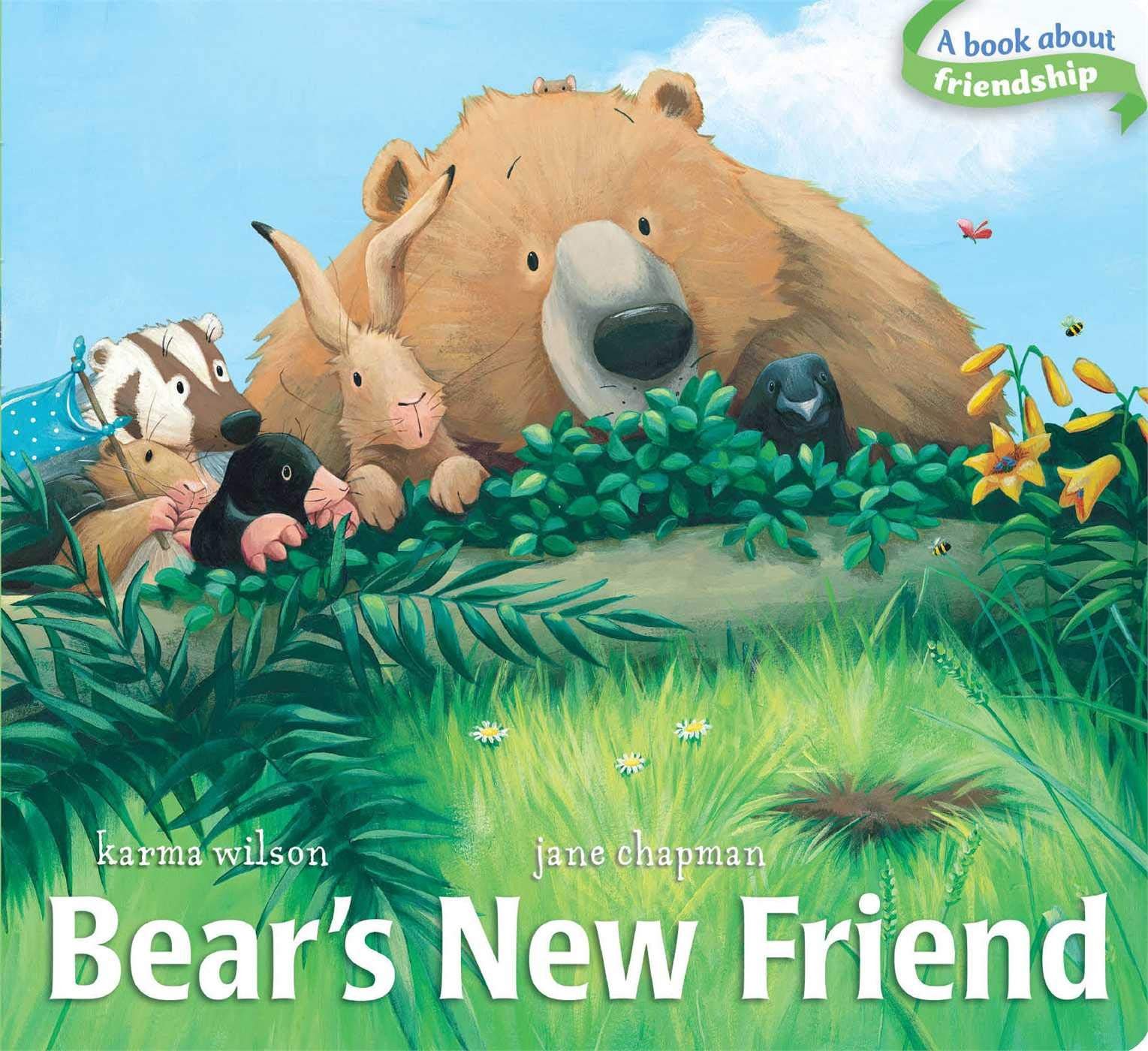
Bear’s New Friend by Karma Wilson
Bear and his friends are spending time together on a hot, summer day while a new animal friend hides nearby. Bear and his friends try to find out who is hiding! This book is perfect for early language learners and families, alike. Each page has a repeating word. After multiple pages, see if your child can fill in the repeated word. With bright and colorful pictures of nature, you can introduce new vocabulary and concepts on every page!

A Camping Spree with Mr. Magee by Chris Van Dusen
Mr. Magee and his dog, Dee take a summer camping trip to the mountains where a silly, exciting, and eventful weekend takes place. Perfect for elementary-aged children! Have your child identify story grammar elements as you are reading (characters, setting, kick-off, feelings, plan, action, resolution.). See if your child can answer prediction questions about what might happen next. When you are done, have your child retell the story including all the important elements. Encourage them to use transitions words such as “first,” “then,” “next,” and “last.”
If you feel like your child or someone you know is in need of therapy services in the areas of speech, language or feeding, please don’t hesitate to call and speak to a clinician today. You can also visit our “Free Screener” tab to answer a few questions and determine if these services may be right for you and your family! We are here to help in any way possible!
Local Cooking Classes and Camps for Kids!

If you are looking for something for your child to do this summer, check out Mix It Up Kitchen! They are located in Duxbury, MA and will be hosting a variety of classes, short camps, and events for children of all ages. They even have adult workshops, too! See the full list of classes here
Cooking is an excellent, hands-on way to get children involved with food. If a child is cooking with a food they won’t eat, they are still getting great exposure to how it looks, feels, and smells. Cooking is a low-pressure way to introduce these foods without any demands to eat in that moment. In addition, cooking offers a great way to introduce any speech and language topics your child may need more practice with. Think about how many directions need to be followed and how many actions and concepts you may use to follow a recipe!
The following excerpts are from Mix It Up Kitchen’s website and provide information regarding their workshops for all ages!
“Tweens & Teens, After School Series: Students tackle more complex skills with an emphasis on kitchen safety, knife skills, various cooking techniques, seasoning and plating. Workshops typically culminate with a seated meal.
Weekend Workshops & Special Events: Workshops are offered before all major holidays and also periodically throughout the year. Please refer to our calendar for specific ages groups.
Child & Caregiver: Cooking inspires curiosity and helps with many early academic skills like counting, colors, shapes and following directions. Periodically we offer caregiver and child classes where an adult and child participate together (but we encourage children to do age appropriate tasks on their own).”
If you don’t want to enroll your child in any structured workshops, no problem! Consider adding a “cooking class” at home every week or two. Below are some ideas on how to connect their speech and language goals to the cooking task at hand. And don’t forget to have fun!
Following directions - present one-step, two-step, or even three-step directions to your sous chef to work on this receptive language skill. Following directions is especially crucial in the kitchen.
Sequencing - review the recipe steps with your child. While preparing the meal, encourage your child to determine “what’s next” in the cooking process.
Problem Solving and Safety – what would happen if you skipped a step? Or missed an ingredient? Use cooking class as an opportunity to present “what if” scenarios and problem solving/safety topics.
Expressive language - describe and/or ask your child to describe the different foods and textures that you’re experiencing while cooking. What color, shape, and texture do they have? How are the ingredients the same or different? Cooking allows you to “get your hands dirty” and experience foods with all of your senses.
Vocabulary - be sure to review each food item and cooking instrument you use during your recipe! Cooking with your children allows you to build a new vocabulary set during a fun and functional activity!
Basic Concepts – following directions seldom goes without understanding and using basic concepts. Put the water IN the measuring cup, mix the dry ingredients TOGETHER, cut the apple into SMALL pieces, etc. Over emphasize the important concepts in each step. Maybe cut the apple into big pieces and see if your child notices that you missed that concept!
Speech Sound Practice - if your child has target goals for the “ch” sound, consider making chocolate chip cookies or cherry cheesecake! If your child has target goals for the “b” sound, consider making buttermilk biscuits or blueberry bagels. Choosing main ingredients with your target sound is sure to result in lots and lots of practice!
Cooking is fun and learning can be fun, too!
If you feel like your child or someone you know is in need of therapy services in the areas of feeding, speech, or language, please don’t hesitate to call and speak to a clinician today. You can also visit our “Free Screener” tab to answer a few questions and determine if these services may be right for you and your family! We are here to help in any way possible!
Celebrate Your Family Structure!

Father’s day is coming up this weekend. While many plan to celebrate with their fathers, father figures, grandfathers, and/or uncles, we also recognize this as an opportunity to shed light on the diversity of each and every family structure.
Below are some books that celebrate different family structures. While reading with your child, you can target family/relationship vocabulary by having them identify who is in their own family and who is in the characters’ families. For younger children, you can target receptive vocabulary by having them point to animals, places, vehicles, colors, characters, etc. as you name them. After you finish a page, or before you start reading the next page, leave a pause to allow your child to comment on what they see or what they heard. Stories also lend themselves to emotion vocabulary, conflict resolution, and theory of mind skills. Books can be used to support language development in so many ways! Pick one, a few, or all of them and get reading! Be sure to let us know your favorites!
Check out your local library to see if they have any of these books available:
· Who's In My Family?: All About Our Families by Robie H. Harris
· Sometimes It's Grandmas and Grandpas: Not Mommies and Daddies by Gayle Byrne
· My Friends and Me: A Celebration of Different Kinds of Families by Stephanie Stansbie
· Fred Stays With Me! By Nancy Coffelt
· A Family Is a Family Is a Family by Sara O’Leary
· Stella Brings the Family by Miriam B. Schiffer
· In Our Mothers' House by Patricia Polacco
· Two Is Enough by Janna Matthies
· In Every House on Every Street by Jess Hitchman
· We Are Family by Patricia Hegarty
VOTE NOW! SLP Center is a Finalist for Family Favorites of 2022!

Thanks to your support, the Speech Language Pathology Center of Norwell is a top nominee! Please go to the following link to cast your final vote at “Boston Parent Paper’s Best”. Final voting is open until June 1st!
Click "Health" then "Speech Language Therapy". You'll see SLP Center listed alphabetically! Simply click to vote. We appreciate you taking a minute out of your day to help spread the word about our commitment to families in need of therapy!